

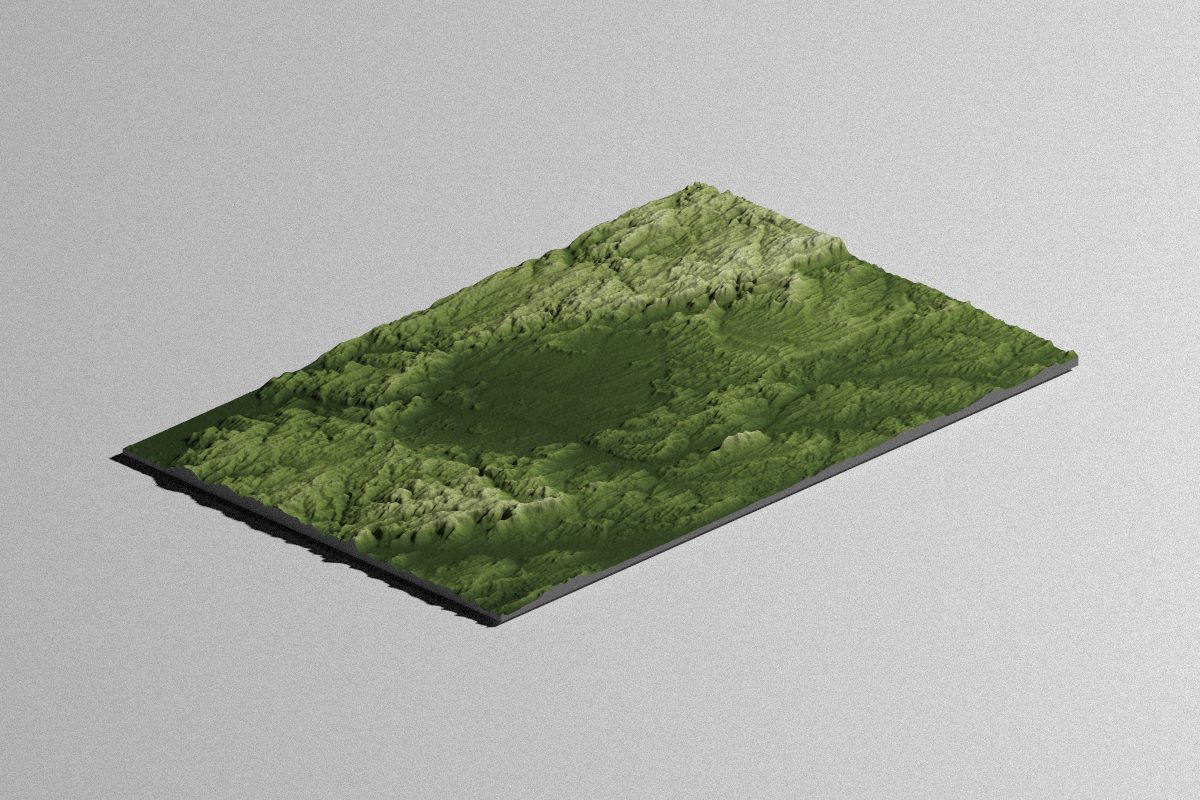
This is the Github Repo for "spatial-epi-101". This repo hosts the materials for a course designed to equip you with the essential skills for analyzing, visualizing, and interpreting spatial health data using R. You can access the course here.
This workbook provides a comprehensive introduction to the principles and practices of spatial epidemiology. Through a series of modules with hands-on exercises and real-world examples, you will learn how to apply spatial statistical methods to:
- Visualise GIS Data in R 🗺️
- Identify spatial clusters
- Explore environmental determinants of health
The course is divided into the following modules:
-
Module 1: Mastering R for Spatial Data
- Learn to handle, manipulate, and visualize vector and raster data using the
sf,terra, andtmappackages.
- Learn to handle, manipulate, and visualize vector and raster data using the
-
Module 2: Advanced Spatial Data Handling and Operations
- Perform spatial joins, buffering, and extract raster values for defined zones.
-
Module 3: Remote Sensing Data for Environmental Epidemiology
- Process satellite imagery to derive key environmental variables like NDVI and NDWI and apply them to model vector-borne diseases.
-
Module 4: Validating Remote Sensed Data with Ground-Truth Observations
- Validate spatial models and maps against ground-truth data using confusion matrices, ROC curves, and other statistical metrics.
-
Module 5: Analyzing Spatial Clustering
- Use spatial statistics like Moran’s I and Ripley’s K-function to identify disease clusters and hotspots.
-
Module 6: Further Reading and Best Practices
- Explore a curated list of key textbooks, R packages, and online resources.
- Learn about the principles of ethical and reproducible research.
To get the most out of this course, you should have:
- A basic knowledge of R programming.
- A fundamental understanding of epidemiological concepts.
- Familiarity with basic statistical methods.
- No prior experience with spatial analysis is required!